Filter and sort

9 products

0 selected
$

0

$

675.00

0 selected
0 selected
0 selected
0 selected

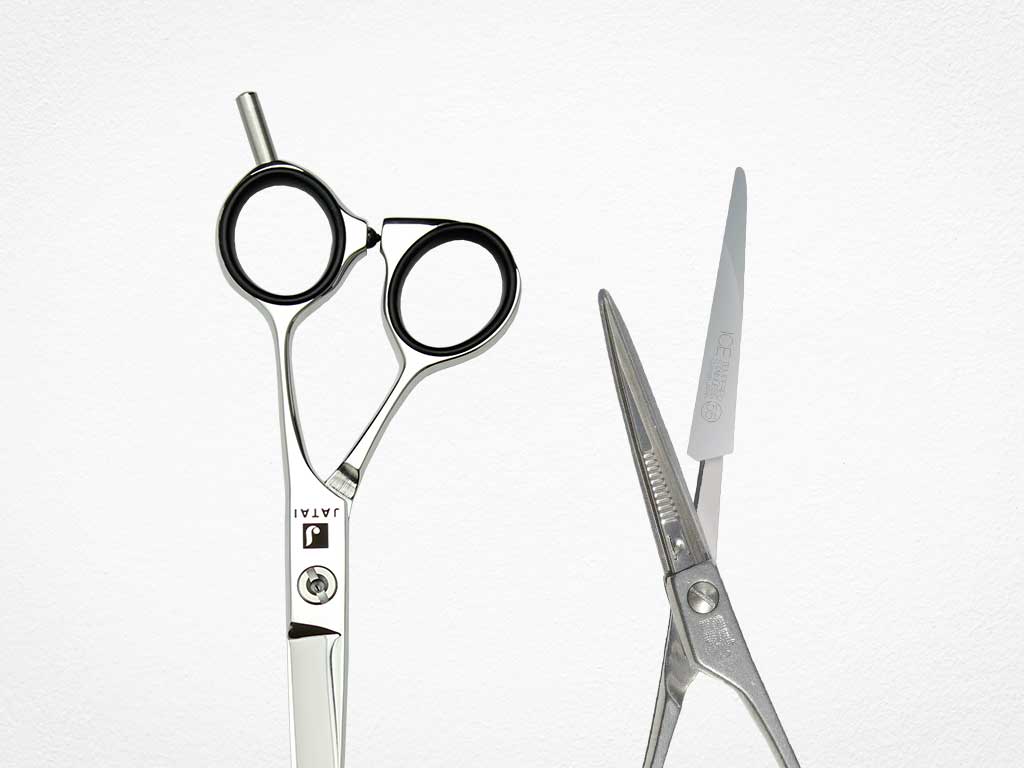
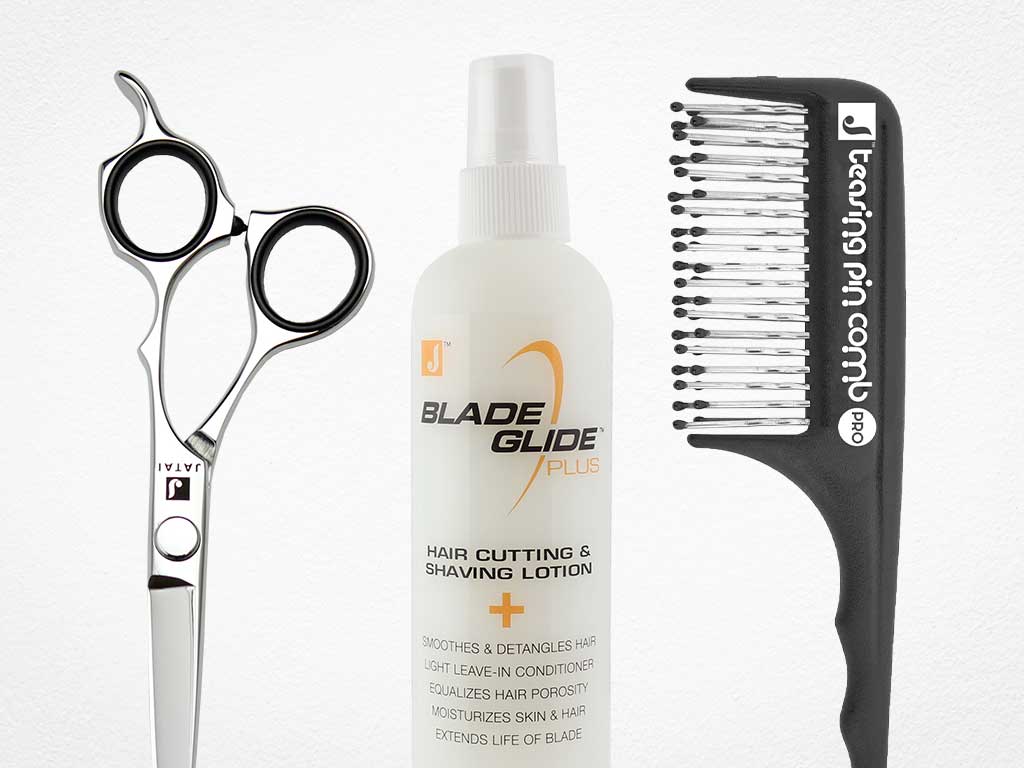
JATAI Kyoto Scissors 6.0" (J-560)

JATAI Kyoto Scissors by BMAC

$675.00

Option Selector
JATAI Tokyo Scissors 5.5 (J-155)

JATAI Tokyo Scissors 5.5" & 6.0" by BMAC

From $360.00

Option Selector
Option Selector
Option Selector
Feather Kaiden Shears 5.5

Feather Kaiden Shears 5.5"

$229.95 $124.95

RELATED ARTICLES

Introducing the JATAI Scissors in Partnership with BMAC

Introducing the JATAI Scissors in Partnership with BMAC

by JATAI, 29 Jun 2021
With every product it offers, JATAI honors the craft of hairstyling - the creativity, skill and artistry that goes into each and every cut. JATAI understands the tools stylists use, particularly scissors, are essential to not just their success, but their creativity. When it comes to tools, quality counts. That's why JATAI has partnered with leading scissors manufacturer BMAC to launch a new line of scissors exclusive to the brand: JATAI Scissors by BMAC. The JATAI Scissors by BMAC line includes four unique styles in select sizes: the JATAI Tokyo Scissors, JATAI Tokyo Thinning Scissors, JATAI Osaka Scissors and JATAI Kyoto Scissors. Handcrafted in Japan with the strictest attention to detail, the six scissors in the collection are forged from VG-10 grade stainless steel - the highest carbon grade steel available - to provide the sharpest and longest lasting edge possible for a traditionally made scissor.   THE DIFFERENT JATAI SCISSORS BY BMAC As a tribute to the origin of the scissors (and to the founders of JATAI), the scissors are each named after cities in Japan renowned for their artistic, cultural and spiritual significance:   Tokyo Scissors Tokyo is regarded as the most popular city in Japan. A cultural hub attracting visitors from all over the world, the bustling city has everything needed all in one place to get a flavor for the country. The JATAI Tokyo Scissors encompass Tokyo's well-regarded popularity and versatility. Ideal for new stylists and barbers just starting out and building their tool assortment. The most popular and affordable high-performance scissor by BMAC, the JATAI Tokyo Scissors features a top-grade metal offset handle with a single, detachable finger rest and convex blade. The custom streamlined flat contact point creates unobstructed, smooth and balanced pivot action. Available in 5.5" ($360.00) and 6.0" ($380.00).   Texturize, remove weight, volumize, layer, shape and add movement with one tool. Measuring 6", the JATAI Tokyo Thinning Scissors give a 30% cut with 29 teeth to texturize hair. Each tooth has three teeth for added softness, making it easier to create texture and layers. Featuring a top-grade metal straight handle with two detachable finger rests and convex blade, plus a flat contact point for smooth and balanced pivot action. ($375.00) Osaka Scissors While not as popular as Tokyo, Osaka is the second largest city in Japan and has strong traditional values and rich culture, but a slightly more relaxed and care-free vibe than found in other parts of the country. The strong traditional values can be best observed in the attention to detail in Osaka cuisine which is rich and nuanced.  Like the food, JATAI Osaka Scissors exemplify the traditional scissor look with a rich feel and subtle nuances that make handling it comfortable and easy to use. Featuring a slightly offset anatomically designed handle with molded tang and convex blade for a natural fit in the hand. Professional-use pivot action means unobstructed, smooth and balanced cutting and handling. Available in 5.5" ($475.00) and 6.5" ($575.00).   Kyoto Scissors Visitors to Kyoto are mesmerized by its spirituality, delicate and refined nature, and cultural charm. To experience Kyoto is to experience true artistic expression. Refined and experienced artists will immediately notice and appreciate how the JATAI Kyoto Scissors enhance their skills and creativity. This design features the utmost attention to detail, the perfect balance, the smoothest movement. The slightly offset, anatomically designed handle and single detachable finger rest create a natural fit for the hand. ($675.00) The JATAI Scissors by BMAC are protected with a one-year warranty for materials and workmanship. To maintain the warranty, the JATAI Scissors must be serviced by our authorized sharpener, Infinity Scissors in Gardena, California. Using another sharpener will void the warranty. For more information on sharpening services, please visit InfinityScissors.com.   Product, Scissors
All About Feather Switch Blade Shears

All About Feather Switch Blade Shears

by JATAI, 31 May 2023
When it comes to haircutting, the most popular tool is the scissor. Scissors are the basic tool to cut hair, create layers, style bangs and create a desirable look. They are likely the first tool you are introduced to in beauty school and they will forever be in your tool kit until you retire. Most hair professionals are familiar with a scissor that is composed of 2 parts. Each part consists of a finger hole and a blade. When you notch two of these together you get a pair of scissors. There are many different scissor styles, sizes and qualities but the best quality scissors are made of stainless steel and have placed careful attention to the scissor performance as well as the sharpness of the blade. Stylists and barbers usually have more than one scissor. They can have different sizes, different brands and different functions such as texturizing scissors or thinning scissors. But over time and depending on how much any individual scissor is used, the scissor will need to be sharpened by a professional to bring back the cutting quality it once had. When frequently used, the blades lose some of their sharpness and it's possible the hinge (where the two blades meet) needs to be fine-tuned. With special care and attention, a quality scissor can last a lifetime. While maintenance is necessary, it is also inconvenient to have to send in scissors for repair. Scissors could be out of commission for a couple weeks or more depending on the location of the service and turnaround time. Furthermore, it's important to do due diligence when deciding who should service your scissors. Because if left in the wrong hands, the scissors could get ruined, and heaven forbid unusable. There's also a possibility the scissors could get damaged or lost in the mail when shipping to and from the service provider. Scissors are worthy investments that can cost a lot of money and the maintenance paired with downtime reveals some undesirable situations. Fortunately, there is an alternative. Feather Switch Blade Shears are innovative haircutting scissors that eliminate the hassle of sending in your scissors for maintenance, reduces costs, and saves you money in the long term. There is no downtime, and they are high quality scissors. Feather Switch Blade Shears are scissors that use replaceable blades. You simply buy replaceable blades, and with a simple snap off and snap on you have fresh new blades! You'll never have to sharpen your shears again. Feather Switch Blade Shears also come in various sizes from a 4.5" to a 7.5" with or without a tang. They are made in Japan and made of high quality Japanese stainless steel. Additionally, Switch Blade Shears have 'no-nip' tips which are rounded at the end to prevent nipping of the fingers. With safety in mind every step of the way, Feather Switch Blade Shears are a unique scissor that fills a very needed gap. You really can't go wrong with these scissors. People who use Feather Switch Blade Shears have been using them for years. They love the convenience, affordability and quality it entails. And you really can't anything like it anywhere else.    Product, Scissors
How to Texturize Hair Using Scissors vs. a Razor on a One Length Bob

How to Texturize Hair Using Scissors vs. a Razor on a One Length Bob

by JATAI, 31 Jan 2024
When it comes to texturizing hair there are multiple ways create it. To create texture using a tool, hair professionals can turn to either shears, thinning shears or razors. If you use one of these tools, it's important to learn various texturizing techniques. Each tool will give slightly different results. In the salon, hairdressing can be challenging. You are constantly dealing with different hair types such as thin or thick hair, straight or curly and short or long hair. You must take into consideration the client's desires as well as the hair you are working with. These factors will help determine the tool used in adding texture to hair. This article will discuss how to texturize hair with some of the best tools on the market. But first, what is textured hair? Hair with texture is one with volume and shape. This could come in the form of movement, body, airiness, curls or waves. Learning how to get more texture in hair is multi-faceted and there are many factors to consider when doing so. In this video, Russell Mayes, Director of Content for Jatai, gives us a run down on how to texturize hair in a one length bob using scissors versus a razor. By understanding the different techniques and the results they give, this can help you decide the best technique to use with your clients to create texture. You can follow along and view the video or read through the transcript below. Enjoy!   How to Texturize Hair Using Scissors vs. a Razor on a One Length Bob Tutorial: Today we're going to be doing a study in texture and how to create textured hair. What's the difference between texturizing with a scissor versus texturizing with a razor? Let's get started.  I've already gone through and cut everything one length. So that's going to give me the simplest shape that I can really see the texturizing pop and the variations between the two. So I'm going to go through and deep point cut with the scissors the entire right side of the head and use some thinning scissors to thin it out where I feel like it's too heavy. And then on the right side of the head I'm going to use my Feather Plier and go through and channel some texture into it and that will also remove weight where I feel that I need to and create separation.   Texturizing Hair with a Scissor So we're going to start right here on the right side of our section of the nape which is the occipital to the mastoid. I'm going to use my Jatai Kyoto Scissors. This is the sharpest scissor that I have and so it's going to be easy for me to apply a deep point cut without having to fight it.  I'm going to comb everything straight down and about halfway through I'm going to comb this right against my fingers to kind of flatten that section out and get it real straight and then I'm going to go through and just point cut real deep. I'm not keeping the scissor completely 100% parallel with the hair. I want to go through and cut it at an angle so I can create some separation and some pieciness to it. Now whenever I go through and do a deep point cut like this I'm basically only adding texture to the bottom 2 or 3 inches of the section. Now from here I'll continue on taking parallel sections as I go up the head. And one thing that I want to be mindful of is to not pick up my previously cut section. I don't want to go through and overly texturize hair that I've already gone through and cut and texturized. I don't want to take too thin a section. If I take too thin of a section I won't be able to see how much that I'm actually taking out so I want a thick enough section that I can actually see my channel point cutting going through. Each section I will cut, I will cut independently of any other section so I have no guide. Each section is cut strictly by feel. If if I need to I'll ribbon that section together go through, cut that up and in. And I'm going to continue my sections until I run out of hair. Now we're coming to the last section. Now for areas that I feel like are too thick I can change up my approach by either going through re-sectioning standing up and going through and cutting through but it's not very easy to control when I do that. On the bottom it you don't have to have that much control but when you're working internally you need more control. So in that case where I need more control over how much hair I'm thinning I'm going to use my Jatai Tokyo Thinning Scissors. This way I can control exactly how much I take and exactly where I'm taking it from and I can choose if I want the texture blade on top of the section or on the bottom. If I go through and use the cutting blade on top it'll be a little bit more seamless so that's what I'm going to do. I'm going to go through take a vertical section, point cut about halfway through. Where it gets longer I may hit it twice. That way I can thin without leaving any kind of scissor marks at all and I can also be much more in control of where I take my hair from and how much I take. Like right here there's less hair. Here there's a little bit more so I'll take a little bit more. This section there's very little through here but just a little bit underneath so I'll take there. And I'm going to go through and do this to all the sections. I will take a larger section and since I'm taking it vertical it'll be easier for me to control than if I take a real fine small horizontal section. Pull that straight out. Little bit there. A little bit more. A little bit more. A little bit more. Where it's thicker I'll take more. I'll hit it more times. Where it's not as thick, I won't take as much. On the top I don't want to run the risk of any kind of alfalfa sprig sticking up so I will never texturize more than about halfway through the section. If I start texturizing up here close I run the risk of that sticking up. Now that's texturized for thinning to even out the thickness and point cutting on the bottom.   Texturizing Hair with a Razor So now let's learn how to make hair textured with a razor. On the razor side I'm going to go through and use a little bit of Jatai Blade Glide to help my razor slide through the hair more effortlessly. So now I'm going to use my Feather Plier Razor which is a guardless razor and I'm going to go through comb this section straight down just like I did on the other side but instead of point cutting up I'm going to razor cut and channel some of this out and take out as much hair as I feel that I need to.  Now with this method I will actually thin and separate at the same time where the other side with the scissor I had to go through and do both independently. I will not channel more than about halfway through the length of the section. I could probably get away with it more underneath than I can on top which sometimes I will actually go through and thin it deeper if I feel that the hair is so overly thick and really really stiff. Now I'm going to continue taking parallel sections as I run up the side of the head. Start in the center of the back and then work towards the front. Close the blade each time so I don't end up cutting any hair or cutting myself. Get that out of the way. Now as I'm going through and channel cutting this I want you to notice that I'm starting with the tip and then I will go in and that way I use the entire length of the blade not just the tip of the blade. I don't thin this very very front piece here. I'll thin the hair just behind it. Now I'm just going to continue on and do the same thing until I run out of hair being mindful to not pick up hair underneath as I texturize each subsequent section. Now let's see if we can tell a difference while it's wet. Oh yes the scissor side is going to be a little bit well actually it's a lot more solid than the razor side. And it's heavier. It doesn't have the same amount of movement to it that the razor side has but let's blow it dry, take a look at it, see how we're doing.   Final Look We've got our lovely model blown dry and now let's compare the differences between the side done with the a scissor and a thinning scissor versus the side done with the razor where you channel cut it and controlled the weight at the same time. You can really see the differences with dry hair. Now on the right side you can certainly tell when I run my fingers through it it still has this nice solid shape and the texturizing is a very soft diffused kind of separation. I still have a good solid strong shape. It creates a lot of movement to it but it still has that solid one length shape and it just bevels my one length shape. So sometimes a one length bob can look very very blunt and broom like. So by going through and doing it this way I certainly bevel that but at the same time I keep it really straight. And most of the movement and texturizing is in the bottom two inches of the hair. Even though I went through and texturized internally it was more of an even diffused thinning where I get the separation underneath. Now if I look at my razor side you can certainly tell when I run my fingers through this I've got a lot more separation of texture from the center all the way down through the ends and it forces it to separate into pieces much more prevalently than the other side. So when would I use one over the other to texture hair? Say for instance that I have somebody with very very thick but fine textured hair, I'm definitely using the razor. If I have someone with thinner hair that I want to maintain a solid shape and I just want to soften the edges, then I'll use a scissor for it.  If I have hair that has a fuzziness in the texture, I'll definitely use a scissor and a thinning scissor for it because I can get my thinning and control without any fear of it exploding the cuticle. Now there are other texturizing techniques such as twist cutting but it's not covered here. Click this link to see a video on twist cutting. While you can also create texturized hair by using chemical sprays or dry shampoos, cutting the hair with either a shear or razor can make texture last for a longer period of time. Sprays can leave build-up over time if they are not washed off thoroughly. Take care when using texturizing sprays and don't over use them. We hope you learned something about how to add texture to hair and it's useful for you in the salon. Even though this was done on a one length bob, these techniques can be done on longer or shorter hair as well. A bob is just the simplest shape for this demonstration. If you enjoyed this video, you can see our other videos in Jatai Academy's Education Connect where we have hundreds of videos to learn from. There are also a number of other videos that show you how to texturize hair in other ways. You can also shop any of our products from our store. We hope to see you again soon.   Tutorial
Zendaya Bob Haircut from the SAG Awards

Zendaya Bob Haircut from the SAG Awards

by JATAI, 26 Dec 2024
The Zendaya bob haircut from the SAG Awards in 2023 was a hairstyle to remember. When she debuted the style on the red carpet, it was an instant head turner. This fashion beauty knocked this hairstyle out of the park as the old Hollywood look was elegant, classic and yet modern. In this Zendaya bob with bangs haircut tutorial, you'll learn everything you need to know to recreate this look. Follow along with the tutorial and transcript below.   Zendaya Bob Haircut Tutorial:   Welcome to the Jatai Academy.  Today we're going to be doing a supermodel bob that Zendaya wore to the Screen Actors Guild Awards. I think it's beautiful. It's luscious. It's lovely. It's elegant, graceful and modern. Alright, so if we're looking at uh you know Zendaya's hair when she wore it to the Screen Actors Guild, this is a very nice elegant one length kind of bob with just some layering around the front and a heavy solid bang with a little bit of curl in it. And I think this is a beautiful beautiful haircut on her. I think she wears it very well, but the key thing to this haircut that makes it really modern is that she has this heavy bang that's kind of brushed to the side so you get this kind of bang fill in that they used to do in roller sets, but it's a much more modern version of that. So it's got a little bit of lightness but a little bit of heaviness. And getting that right I think is the key to making this haircut really fit.   Sectioning the Hair So to start with my bob shape I want to start as neutral as possible. So I'm going to take a center part down to the crown, from the crown straight down to the occipital bone, occipital bone straight to the center of the spine. Once I got the center part, I'm going to take from the occipital bone, that bump in the back of the head, right to that bump below the ear behind the ear which is called the mastoid process. So once I got the flat part of the back of the head sectioned out, this is going to be the foundation for me to build the solid bob shape. If the hair is too thick which a lot of times it is, I will separate this in half, following the same section that I had above it keeping my lines parallel. Once I get everything sectioned out like I want and it's even on both sides, I'm going to start the section in the middle. Start that right in the center and I determine the size of that section by where the comb is flat against the head. That way I don't have to worry about inconsistent graduation because I'm cutting across a curved part of the head and elevating it inconsistently compared to a flat section.   Building the Zendaya Bob Haircut Shape And then from here I'm going to use my Jatai Kyoto Scissors. It is my sharpest scissor. It also has a nice, weighted blade so it cuts a nice clean solid section no matter how thick the section is. Comb that clean from the root down. Make sure my fingers are perpendicular to the parting. There is my section. I'm holding that as low elevation as I can. Go through cut that straight across. Make that as blunt as I possibly can. The sharper the scissor, the better. Comb this down. There's my angle. That's the way I'm combing my parting, T to the parting. So I make like a T with the hair with the parting. There's my guide. Oops, go through, cut that straight across. I push that a little bit and there's my little bit right through there. Cut that as clean as you can. Then I'm going to do the same thing on the other side. Then we're going to check and see that looks good. It looks nice and even. Now we're going to continue with the next section. I have my baseline. I'll start exactly in the middle just like I did the first section. Comb that straight down. And you'll notice when I'm combing the teeth of the comb were away from my fingers and then I hook the comb about halfway through, bring into my fingers with no tension, and then just clasp my fingers right there exactly on top of the previously cut guide. Here we start ending up with where the head is curving. So I have a flat section there, a flat section there, a flat section there. So this section requires three subsections to cut. There's my line underneath. Cut directly on top of that. My next line there, comb clean. Cut directly on top of my previously cut guide. Same thing on the other side. I'm taking little flat sections as I work around the head. Comb that down and through. There's my line from my previously cut. Cut that through. I want to make sure that I am directly on top of my previously cut guide, not cutting it shorter or longer. That's what makes this the hardest haircut to do is you have to mimic that same cut for numerous sections all the way up the head. And it gets more and more difficult to cut it directly on top of your guide. Now our next section, I followed the same pattern, the same angles of section that I was taking. I just took the next flat section up and I will start exactly the same way that I was doing before, flat section in the middle. Oops! And then as I work one, two, three. So I've got three sections on that side. As we'll continue to work down.   Follow us on your favorite social media @jataifeather   I'll continue on my little flat section. There's my parting. I comb T to the parting and cut my line parallel to my parting. Now I'm going through and cutting this as blunt as I can possibly get it because Zendaya has this really solid bob shape and it's going to be different if I was to point cut it. I don't have to be as precise. But with cutting it really blunt I have to really really maintain my precision as I build the shape or it's going to start to look funky. This is kind of a key area right here where we're working over the ear. Now what makes this section so difficult is I have a protruding ear that I have to deal with that can really throw a monkey wrench in my cut line on the bottom, but we'll show you how to deal with that after I start in the center just like I was doing previously. Comb clean. Cut everything through. Okay now as I start to get into the section over the ear there's a lot of different ways that I can deal with this. I can go through and take a section directly on top of the ear cut half of the section behind the ear and half of the section in front of the ear to leave me a little bit of space there to deal with later. Or what I tend to do is comb everything smooth with only tension that I generate from the comb. Once I put my fingers in, no tension, I hold very gently and very lightly and then just push the hair under the ear and then cut my line and if I go through, oops, and check that again and I used tension on it, you start to see a little bit of a hiccup there. That is the hair that is my safety net so that when I blow it dry and clean it up at the end I don't end up with a hole. Okay tilt down a little bit, continue on until I run out of hair.   Give us a thumbs up, click subscribe and the notification bell to be notified of future Jatai Academy content.   Now to separate the front, I'm using the same methodology of using the flat part. So I have this flat. I have the second flat which goes to this curve of the head where at that point all the hair starts to fall forward. Usually, the second flat I take that to the top of the ear. When I start my face framing, the smaller the initial section that I take right through here, the quicker that it becomes a frame. The wider the section that I take as my guide, I get a more heavy bang and then it blends down through and if I look at the photo, it's this heavy kind of bang and that blends down.   Creating the Heavy Bang So we're going to take a pretty wide section right through here, right to the center of the recession. I'm going to elevate off the curvature of the head so that it doesn't end up being a blunt heavy bang but something that flows. So it's got a little bit of layering by me elevating. It's actually going to have a little bit of graduation. So I'll pull that forward. I think I'm going to go right to the top of the lip, right through there. Cut that blunt straight across. Comb the next section into it right next door. There's that. The next piece right next door. There's that. So now as I bring the rest of the hair down, this is the hair that I'm going to use to blend my short piece down to my long piece. The way that's going to work is I'll comb this straight down in natural fall, angle my fingers. Here's my length I'm cutting to. Here's my length I'm cutting from and then I'll softly point cut that to give me a nice blend through. As long as I don't cut this piece I'm fine and I'm going to be okay. All the way down to that corner. Same thing on the other side. There we go. Now as I start to comb this we'll see this heavier kind of bang come in and then we have our blend through the sides. Blending Bangs with the Sides Next piece. This is usually the easiest piece because I just want to make sure everything blends over. So all I'll have is a little bit of hair right there from where it transitions from front to back. And again, I will comb this in its natural fall. There's my line from underneath, point cut that down and through. I have to point cut this unless I go through and blow everything dry and flat iron it and then just free form cut it like this because it's difficult for me to go through and angle my fingers straight enough to cut it blunt. I take a center section for my layering and I'm only going to layer a little bit around the front here. As I hold my first two flat sections up, you'll see my fringe fall out. I'll pull everything else up, take a little bit of that length off cutting it 90 ° off the head shape. Next piece 90 °. There's a little bit of length there to cut. Take a small piece as my guide and as I get to the crown I should have very little if any hair that's going to reach and there's just that little bit of curvature right there. Now I'll take everything on one side. Since I'm doing very little layering it's just enough to take that edge off around the front. I'll take the entire left side of the head, pull everything straight up. There is my line. There is the hair that hangs over. We're going to continue, come here, continue this straight up. There is my line. Cut that down and through and then on this last section there should be very little hair that reaches if any at all, really. Comb everything up. Be patient and diligent. Make sure everything's clean. There's a little bit right through there. Now we'll do the same thing on the other side. We got our basic shape here. Everything's looking pretty good. We got a nice solid bang.   Zendaya Bob Haircut Final Look Let's go through and blow it dry. See how it looks. Here's our end result and uh I think we're looking pretty good. Curl looks pretty good in it. I think we got the curl pattern right. Blunt all the way around except for a little bit of layering around the front. So I'm pretty happy with that. So the whole thing about this haircut is just making sure that bang is heavy and not really uh face framed and really wispy and light. You got to have a heavy bang so that when you brush it back it falls in and fills in nice and solid around the front. Anyway, let us know what you'd like to see in the future. Check out the Jatai Academy. There are all kinds of great information on there that will make you a better hairstylist and barber. And thank you so much for watching. We'll see you next time.   Final Thoughts When we look at Zendaya with short hair or long hair, she knows how to pull off many different looks. From this Zendaya butterfly bob to a Zendaya long bob, she gets it right. But you can recreate these looks as well with some know how and practice. For other bob haircut tutorials, visit Jatai Academy.   Tutorial  

Product compari­­son

View more